


Every year, more than 24 lakh students appear for NEET-UG, the single medical entrance exam that decides who becomes a doctor in India. Many prepare for two to five years — moving cities, taking loans for coaching, studying 10–12 hours a day.
In 2026, their trust was broken again. The NEET paper leak, combined with irregularities in CBSE’s on-screen marking process, has triggered one of the largest student movements India has seen in years — now in its eighth week at Jantar Mantar in New Delhi.
This is the full story of the NEET paper leak 2026 in one place: what happened, who is protesting and why, how the government has responded, how this leak fits into India’s long history of exam scandals, and — most importantly — five practical solutions that could end the paper leak problem for good.
(This is a news explainer. It does not support any political party or group. Where facts are disputed, both versions are presented.)
What Is the NEET Paper Leak 2026 Controversy?
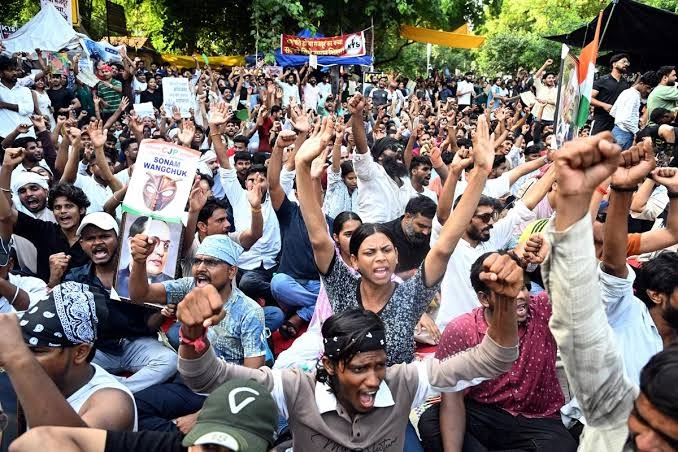
Two separate examination failures collided this year:
- The NEET paper leak — allegations that the NEET-UG medical entrance question paper was circulating before the exam, echoing the NEET paper leak of 2024 that had already forced a CBI probe and a shake-up of the National Testing Agency (NTA).
- CBSE on-screen marking irregularities — problems in the board’s digital evaluation and revaluation process that left thousands of students uncertain about their final results.
The timing could not have been worse. The 2024 NEET paper leak was supposed to be the wake-up call. The Public Examinations (Prevention of Unfair Means) Act had already been passed in 2024, with penalties of up to 10 years in prison and ₹1 crore in fines (full text on PRS India). Yet two years later, students found themselves asking the same question: how did a NEET paper leak happen again?
We covered the early days of this story when it first broke — read our earlier roundup: India’s Biggest Stories Right Now: NEET Paper Leak Busted.
Not the First Time: India’s Long History of Paper Leaks
To understand why the NEET paper leak 2026 sparked such anger, you have to see the pattern it belongs to. India’s exam system has been leaking for over a decade, across states, exams, and governments:
- Vyapam scam, Madhya Pradesh (exposed 2013) — the mother of all exam scandals. Systematic rigging of medical entrance and recruitment exams through impersonation, leaked papers, and answer-sheet tampering, involving thousands of accused and dozens of mysterious deaths of witnesses and suspects.
- Bihar toppers scam (2016) — state board “toppers” who could not answer basic questions on camera exposed a marks-for-money racket in evaluation itself.
- SSC CGL (2017) — leak allegations in the Staff Selection Commission exam brought thousands of aspirants onto Delhi’s streets and forced a CBI inquiry.
- REET, Rajasthan (2021) — the teacher eligibility paper leaked, the exam was cancelled for lakhs of candidates, and the SOG arrested officials from within the exam machinery.
- UP Police constable exam (2024) — the paper leaked and the exam was cancelled and re-conducted for roughly 48 lakh candidates — one of the largest re-exams in history.
- NEET paper leak (2024) — the paper allegedly leaked in Bihar and other states before exam day; the UGC-NET was separately cancelled within 24 hours of being held; the NTA’s Director General was removed; the CBI took over; and Parliament passed the anti-cheating law.
- NEET paper leak (2026) — despite the new law and the reforms, here we are again.
Notice what repeats in every case: the leak came from inside the system — printing presses, transport chains, strongrooms, exam centres, evaluators. Different states, different parties in power, same weak links. The NEET paper leak is not a one-off failure. It is the most visible symptom of a structural disease.
The Jantar Mantar Protest: A Timeline of 7 Key Events
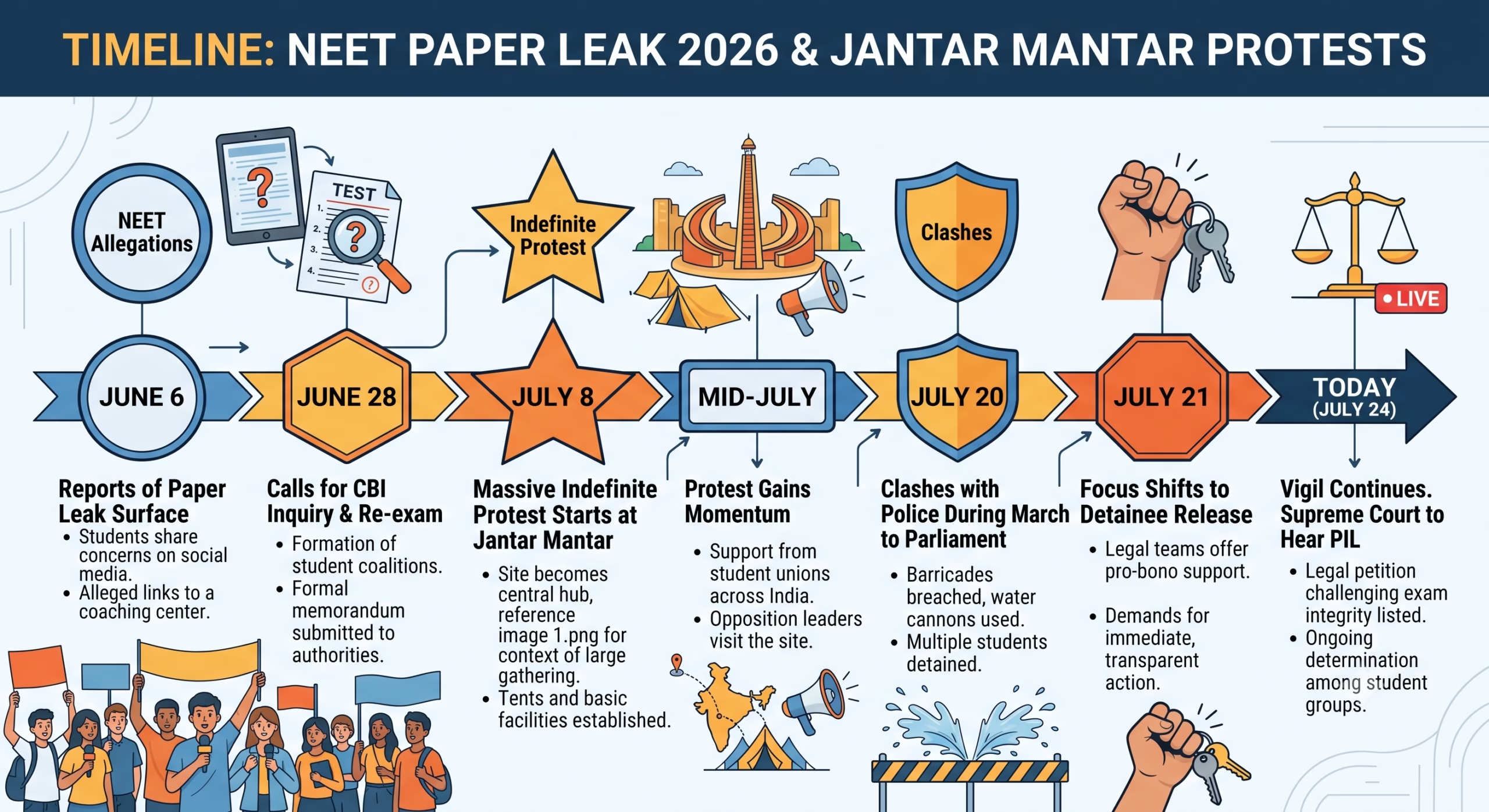
1. June 6, 2026 — The protest begins. The Cockroach Janta Party (CJP), a youth-based satirical political movement founded by digital strategist Abhijeet Dipke, launches a sit-in at Jantar Mantar over the NEET paper leak, joined by student organisations including SFI, AISA, and AISF. The name is deliberate satire — the idea that India’s youth, dismissed and stepped over, keep coming back like cockroaches that cannot be exterminated.
2. The core demands. Resignation of Union Education Minister Dharmendra Pradhan over the NEET paper leak and CBSE marking issues, a transparent probe, and structural reform of how national exams are conducted.
3. June 28 — Sonam Wangchuk joins. The climate activist and education reformer begins an indefinite hunger strike at the protest site, bringing national and international media attention to the movement.
4. Mid-July — The movement grows. Politicians, lawyers, farmer leaders, journalists, and film personalities visit Jantar Mantar. Shabana Azmi joins the protest in person. Anurag Kashyap, Huma Qureshi, Vishal Dadlani, and Vir Das criticise the police response on social media. Salman Khan takes a different line, urging that the movement should not be politicised, calling it “an issue between students and the education system.”
5. The ‘Sansad Chalo’ march. The CJP calls a march to Parliament on the opening day of the monsoon session. Delhi Police close 16 metro stations, barricade roads around central Delhi, and deny permission for the march.
6. July 20–21 — The crackdown allegations. Media reports, including in The Hindu, claim pellet guns and shock batons were used against protesters, alongside lathi-charge. Delhi Police deny these claims, stating “no such incident” occurred. Reports also raise questions about plainclothes officers operating during the protests. On the 21st day of his hunger strike, Sonam Wangchuk is moved by authorities to Safdarjung Hospital — a step the government describes as medical necessity and protesters describe as forced removal.
7. The escalation. Following the crackdown allegations, protesters expand their demands to include the resignations of Prime Minister Narendra Modi and Home Minister Amit Shah — transforming a student agitation over a paper leak into a national political flashpoint.
For a continuously updated factual record, see the Wikipedia entry on the 2026 Delhi Jantar Mantar protests.
What the Government Has Done — And What Critics Say
The government’s response to the NEET paper leak so far:
- Announced fast-track courts for exam-leak cases so that accused leak organisers face trial quickly
- Continued investigation under the Public Examinations (Prevention of Unfair Means) Act, 2024
- Maintained that law-and-order measures around Parliament were necessary and denied the use of pellet guns and shock batons
- Moved Sonam Wangchuk to hospital on health grounds during his hunger strike
Supporters of the government argue that exam mafias, not ministers, run leak operations; that fast-track courts are exactly the systemic answer students asked for; that a march on Parliament during a live session is a security issue in any democracy; and that opposition parties are riding a genuine student issue for political gain.
Critics argue that announcing courts without a single high-profile conviction is symbolism; that no official has taken responsibility for a NEET paper leak happening twice in three years; that force against student protesters — if the reports are accurate — is disproportionate in a democracy; and that hospitalising a hunger striker without consent undermines the right to peaceful protest.
Both positions have serious people behind them. What is not in dispute: the paper leaked, students were harmed, and the system that was reformed after the 2024 NEET paper leak failed again in 2026.
Why Paper Leaks Keep Happening in India: The 5 Weak Links
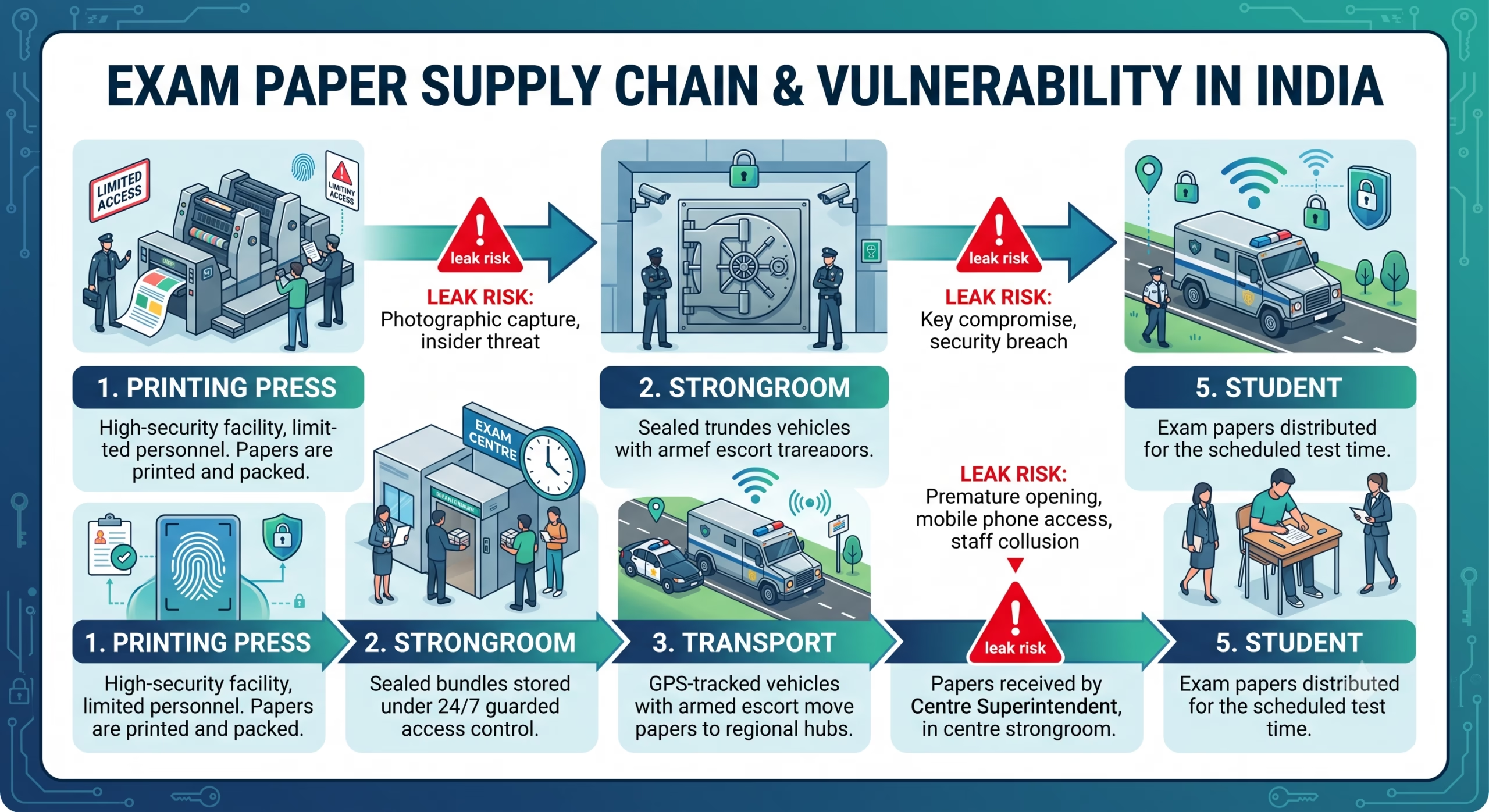
Here is the uncomfortable truth: a paper leak is not an accident. It is an organised business. Leaked papers reportedly sell for ₹30–50 lakh per copy, and the buyers are often desperate families who see one exam as the only gateway to a secure future.
The business is possible because a traditional pen-and-paper exam passes through too many hands over too many days:
| Stage | Who Has Access | The Risk |
|---|---|---|
| Question setting | Professors, exam body officials | Insider leak at the source |
| Printing | Press workers, contractors | Copies smuggled or photographed |
| Storage | Bank/strongroom staff | Papers accessed before exam day |
| Transport | Drivers, escorts, local officials | Sealed boxes opened in transit |
| Exam centre | Superintendents, invigilators | Early opening, phone photos in the exam hall |
Nearly every major paper leak in India’s recent history — Vyapam, REET, UP Police, and both NEET paper leak cases — happened at one of these five stages, usually with insider involvement. The mafia does not “hack” a computer. It pays one person in a long, weak chain.
That means the solution is not one magic law. It is shrinking the chain itself.
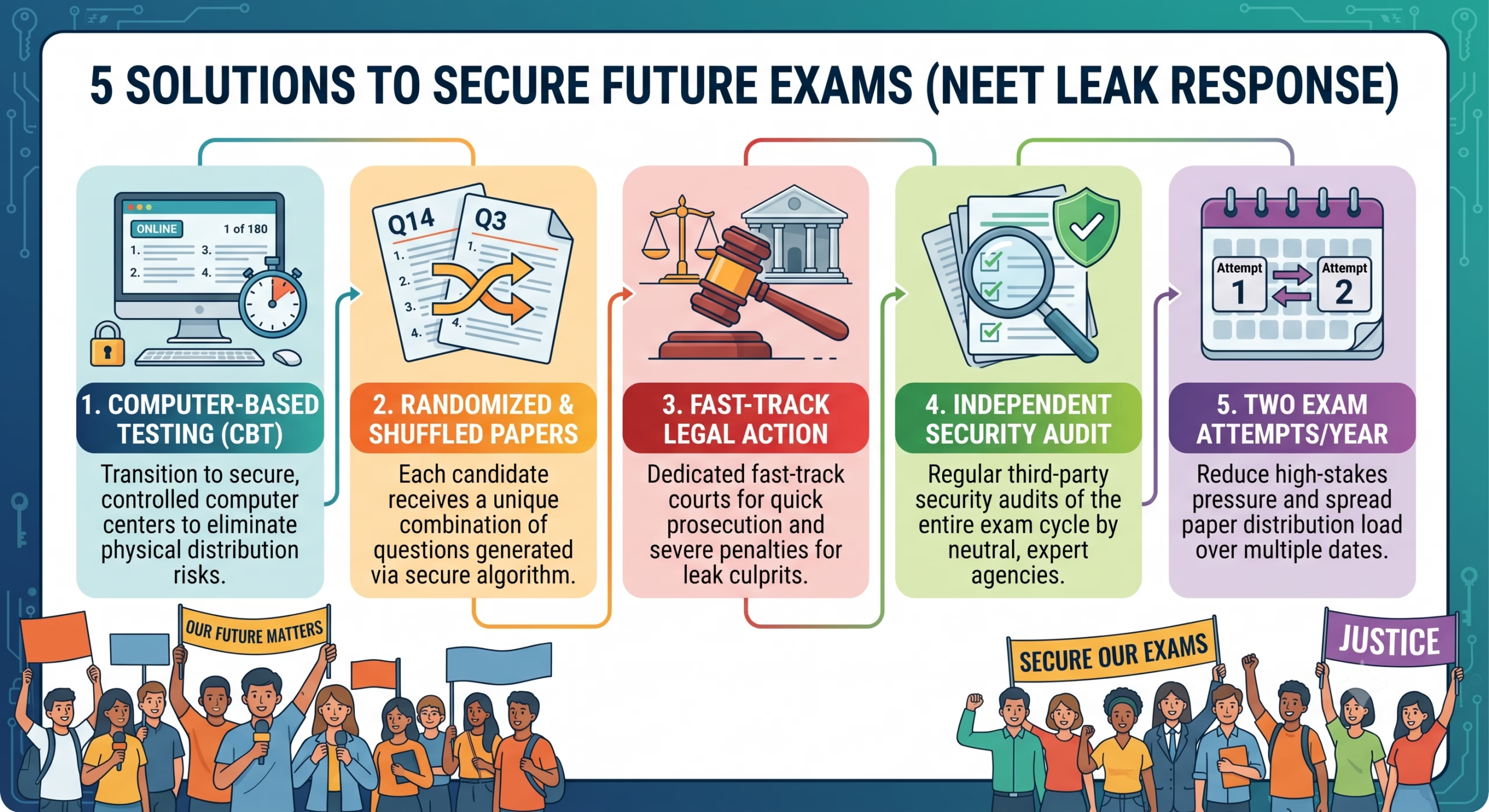
How to Stop the NEET Paper Leak Problem: 5 Proven Solutions
Solution 1: Eliminate the Physical Paper — Move to Computer-Based Testing
The single most effective fix. If no printed paper travels across the country for weeks, there is nothing to steal — a NEET paper leak becomes physically impossible in its current form.
The model: encrypt the question paper, transmit it digitally to exam centres 30–60 minutes before the exam starts, and conduct the test on screen — or print on-site under camera surveillance in areas without computer infrastructure.
This is not theory. JEE Main already runs fully computer-based for over 10 lakh candidates across hundreds of cities (NTA official site) — and JEE has never suffered a physical paper leak, because there is no physical paper. The genuine concern — that rural students have less exposure to computers — can be addressed with a phased hybrid model: computer-based testing in cities first, secure same-day printing in remote districts, and free CBT practice centres in government schools.
Solution 2: Randomised Question Papers from a Question Bank
International exams like the GRE and GMAT generate each candidate’s paper from a large, difficulty-calibrated question bank. There is no single “the paper” to leak — a stolen copy helps almost nobody.
Even a middle path works: 15–20 shuffled versions make a leaked copy nearly worthless, because a buyer cannot know which version they will face. The counter-argument — that no two papers can be perfectly equal in difficulty — is fair, and is exactly why calibration and normalisation (already used in multi-shift JEE) matter.
Solution 3: Make Leaking Economically Stupid — Certainty Over Severity
India already has a strict law on paper: up to 10 years in jail and ₹1 crore fines under the 2024 Act. Yet the NEET paper leak of 2026 happened anyway — because the problem is not severity, it is certainty. A mafia that expects a verdict in 10 years is not afraid; one that expects a verdict in 6 months is.
The deterrence toolkit:
- Fast-track courts with binding timelines (announced in 2026 — the test is delivery)
- Attachment and seizure of property of leak organisers, cutting off the profit motive
- Permanent debarment and criminal liability for candidates who knowingly purchase leaked papers — because a market needs buyers, not just sellers
Solution 4: Independent Audit of Exam Bodies
Today, the NTA effectively investigates its own failures — after the 2024 NEET paper leak, it was NTA processes reviewing NTA processes until the CBI stepped in. No institution audits itself well; that is why elections have independent observers and government spending has the CAG.
A standing independent examination audit authority — reviewing the chain of custody, security protocols, and incident response of every national exam — would replace after-the-fact committees with before-the-fact accountability. The counter-view, that another body means more bureaucracy, deserves a design answer (a lean audit office, not a parallel ministry), not a dismissal.
Solution 5: Lower the Stakes — Two Attempts Per Year
The deeper reason a leaked NEET paper sells for lakhs is that one 3-hour exam decides everything for 24 lakh people. Extreme stakes create extreme desperation — for students, and for the paper leak mafia’s market.
JEE already offers two attempts a year with the best score counting. Extending the same to NEET would halve the value of any single leaked paper, halve the pressure that pushes families toward shortcuts, and reduce the mental-health toll of one-shot exams. (Exam stress is real and clinically significant — if you or someone you know is struggling, our guide on 7 clear signs it’s time to see a psychotherapist is a good starting point.)
The Honest Caveat: Technology Alone Won’t Fix This
No system is 100% leak-proof if insiders are compromised — and from Vyapam to the NEET paper leak cases, officials inside the exam machinery itself have repeatedly been among the accused. Computer-based testing shrinks the attack surface dramatically, but only accountability shrinks corruption.
That is why the two halves of this story belong together. The students at Jantar Mantar are not only asking for a re-exam or a resignation. Strip away the politics, and the underlying question is one every Indian — regardless of party — has a stake in: when a national system fails 24 lakh young people twice in three years, who answers for it, and what changes?
The Bigger Picture: What the NEET Paper Leak Moment Means
Whether you see the Jantar Mantar movement as a Gen Z accountability revolution or as a student cause hijacked by political actors, three facts remain:
- The grievance is real. The NEET paper leak happened, after the country was promised — in Parliament, in law, in reform committees — that it would not happen again.
- The response is contested. Police conduct claims and denials cannot both be true; an independent inquiry is the only way the public will know.
- The fix is known. The five solutions above are not new ideas — they are implemented, working models from JEE, GRE, and election oversight. What has been missing is not knowledge but will.
India’s exam system carries the ambitions of the world’s largest young population. How the NEET paper leak crisis is resolved — in courtrooms, in exam halls, and at Jantar Mantar — will decide whether the next 24 lakh aspirants can trust the paper in front of them.
What do you think is the real fix for the paper leak problem — technology, punishment, or accountability at the top? Tell us in the comments below.
Also on WriterBench
- India’s Biggest Stories Right Now: NEET Paper Leak Busted
- Psychotherapist: 7 Clear Signs It’s Time to See One (2026 Guide)
- More from our Education section
Sources: Wikipedia — 2026 Delhi Jantar Mantar protests, Al Jazeera, The Hindu, Deccan Herald, The Indian Express, Reuters, NTA, PRS Legislative Research. Facts current as of 24 July 2026; this is a developing story.