

One of the more subtle, yet significant, downsides of using ChatGPT AI is reduced recall and a weakened sense of ownership over your work.
When AI generates content for us, we tend to process the information less deeply. This makes it harder to remember key details later.
It also creates a weaker connection to the ideas being presented. You may even feel like the work isn’t fully your own.
Think of it like this: reading a book yourself vs. getting a quick summary. You might understand the story, but you’ll miss the deeper insights that make it truly memorable.
Key Takeaways
- Using AI Chatgpt AI a lot can make your brain work less, leading to poorer memory and feeling less connected to your own work.
- Over-reliance on AI Chatgpt AI might hurt your ability to solve problems and think for yourself, which is a big deal for learning.
- A study from MIT showed that people using AI Chatgpt AI had less brain activity and often just copied and pasted stuff, getting lazier over time.
- Younger people are especially at risk from using AI Chatgpt AI too much, as it could stop them from developing basic skills.
- While AI Chatgpt AI can be helpful, it’s important to balance its use with doing things the ‘brain-only’ way to keep your mind strong.
The Cognitive Cost of Chatgpt AI Use
Reduced Brain Engagement with Chatgpt AI
It’s becoming clear that relying on ChatGPT AI might make our brains a little lazy. When we constantly outsource thinking, problem-solving, and writing to AI, our brains simply don’t get the workout they need. Think of it like this: if you always use a calculator, you might forget how to do basic math in your head. The same goes for AI; the less we engage our cognitive muscles, the weaker they become.
Lower Recall and Ownership of Work
One of the more subtle, yet significant, downsides of using ChatGPT AI is the potential for reduced recall and a diminished sense of ownership over the work produced. When AI generates content for us, we’re less likely to deeply process the information. This can lead to:
- Difficulty remembering key details later on.
- A weaker connection to the ideas presented.
- A feeling that the work isn’t truly ‘ours’.
It’s like the difference between reading a book and having someone summarize it for you. You might get the gist of the story from the summary, but you’ll miss out on the nuances and details that make the story truly memorable.
The Concept of Cognitive Debt
MIT researchers are talking about something called ‘cognitive debt’ when it comes to using AI like ChatGPT. It’s like financial debt, but instead of owing money, you owe your brain some serious mental effort. Every time you use ChatGPT AI to bypass thinking, you accumulate this debt. Eventually, this can lead to a decline in your ability to think critically and solve problems independently. It’s a trade-off: convenience now for potential cognitive struggles later.
Impact on Critical Thinking Skills
Deterioration of Problem-Solving Abilities
It’s easy to see how relying too much on AI like ChatGPT AI could make our problem-solving skills a bit rusty. If you always have an AI giving you the answers, you’re not really stretching your brain to figure things out yourself. It’s like using a calculator for every math problem – you might forget how to do basic arithmetic. This can be especially harmful when facing new, complex challenges that require original thought and creative solutions.
Risk of Academic Dishonesty
Let’s be real, the temptation to use AI to cheat on schoolwork is definitely there. It’s so easy to just copy and paste something ChatGPT AI spits out, especially when you’re stressed or short on time. But doing that means you’re not actually learning the material. It’s a shortcut that can seriously backfire in the long run. Plus, it undermines the whole point of education, which is to develop your own understanding and abilities.
Hindering Basic Skill Development
AI is great for some things, but it shouldn’t replace the need to learn basic skills. Think about writing, for example. If you always use AI to write your essays, you might never learn how to structure an argument, develop your own voice, or even spell correctly. These are skills you need in all sorts of situations, not just school. It’s like learning to cook – you can’t just order takeout every night and expect to become a chef. You have to practice and develop those skills yourself.
Over-reliance on AI tools can create a situation where individuals become overly dependent on technology, leading to a decline in their ability to think independently and critically. This dependence can hinder the development of essential problem-solving skills and reduce overall cognitive flexibility.
Evidence from MIT Research on Chatgpt AI
Study Design and Methodology
MIT’s Media Lab recently conducted a study to explore how ChatGPT AI affects critical thinking. The researchers divided 54 participants, aged 18 to 39 from the Boston area, into three groups. Each group was tasked with writing several SAT essays, but with different tools: one group used ChatGPT AI, another used Google Search, and the third wrote without any assistance. The study aimed to measure and compare brain activity across these groups.
EEG Findings on Brain Activity
During the essay writing process, the researchers used EEG (electroencephalography) to monitor and record the participants’ brain activity. The EEG measured activity across 32 brain regions. The key finding was that the group using ChatGPT AI showed less brain activity compared to the other two groups. This suggests that relying on AI might reduce cognitive engagement during tasks that typically require more mental effort.
Behavioral Observations of Chatgpt AI Users
Beyond the EEG data, the researchers also observed the behavior of the participants. Some notable observations included:
- Participants using ChatGPT AI tended to spend less time planning and outlining their essays.
- They also showed a greater tendency to accept the AI’s output without critical evaluation.
- There was a noticeable difference in the depth of engagement with the essay topic among the groups.
The MIT researchers expressed concern about the potential for over-reliance on AI tools to hinder the development of critical thinking skills, especially in younger individuals. They cautioned against creating a ‘GPT kindergarten’ where basic cognitive functions are bypassed.
The Downside of Over-Reliance on Chatgpt AI
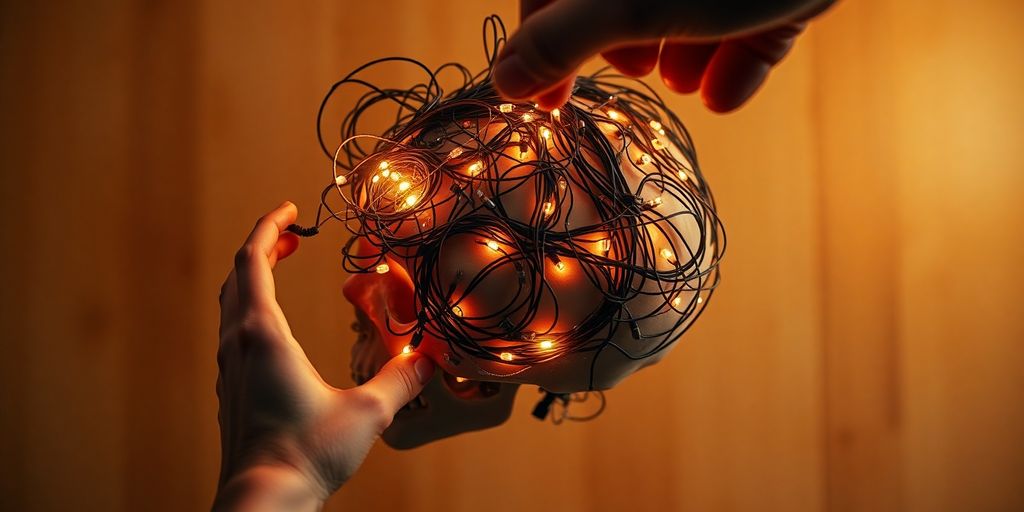
It’s easy to fall into the trap of using ChatGPT AI for everything. After all, it’s quick and convenient. But what happens when we constantly rely on AI to do our thinking for us? The consequences might be more significant than we realize. It’s not just about getting the work done faster; it’s about what we lose in the process.
Increased Laziness Over Time
Using ChatGPT AI can be like a mental shortcut. The more we use it, the less we exercise our own cognitive muscles. This can lead to a gradual decline in our ability to think critically and solve problems independently. It’s like relying on a calculator for simple math – eventually, you might forget how to do it in your head. This is especially true if you are using AI for essay writing.
Copy-Pasting Tendencies
One of the biggest dangers of over-relying on ChatGPT AI is the temptation to simply copy and paste its output without truly understanding it. This can lead to a lack of originality and a diminished sense of ownership over our work. It’s easy to become a passive consumer of information rather than an active creator.
Bypassing Deep Memory Processes
When we use ChatGPT AI to generate ideas or write content, we’re essentially outsourcing our memory and cognitive processes. This can prevent us from engaging in the deep thinking and reflection that are necessary for learning and retaining information.
Over-reliance on AI can hinder the development of crucial cognitive skills. It’s important to strike a balance between using AI as a tool and engaging in independent thought and problem-solving.
Here’s a simple comparison:
| Task | Brain-Only Approach | ChatGPT AI-Assisted Approach |
|---|---|---|
| Idea Generation | Requires active brainstorming and critical thinking | Ideas are generated quickly, but may lack depth |
| Writing | Demands careful planning and organization | Content is generated rapidly, but may require significant editing |
| Problem Solving | Encourages independent analysis and creative solutions | Solutions are provided quickly, but may not be fully understood |
Vulnerability of Developing Brains to Chatgpt AI
Higher Risk for Younger Users
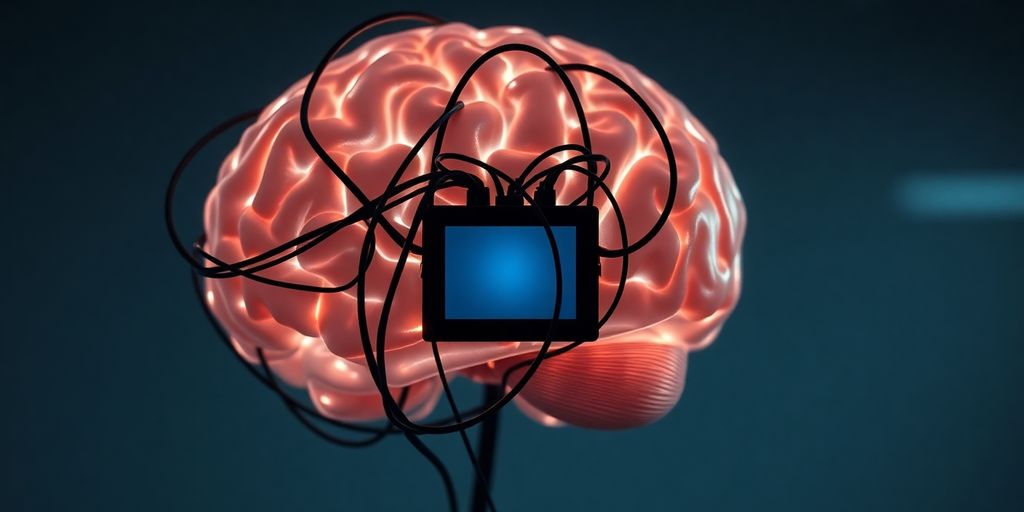
Younger brains are still developing, making them particularly susceptible to the negative impacts of over-reliance on AI. The brain’s plasticity means that habits formed during youth can have lasting effects. It’s like learning to ride a bike – if you start with training wheels for too long, it’s harder to balance later on. The same goes for cognitive skills; if kids depend on AI for problem-solving too early, their natural abilities might not fully develop. This is especially true concerning the neurobiological effects of digital media.
Concerns for Educational Settings
Schools are grappling with how to integrate AI without hindering learning. The worry is that students might use AI to bypass critical thinking, leading to a superficial understanding of subjects. It’s tempting to let AI write essays or solve math problems, but this can prevent students from truly engaging with the material.
- Reduced engagement in learning activities
- Decreased motivation to learn independently
- Potential for a decline in academic performance
Avoiding ‘GPT Kindergarten’
There’s a growing concern about creating a “GPT Kindergarten,” where young children become overly dependent on AI for basic tasks. This could stunt their cognitive growth and limit their ability to think for themselves. Independent thought is crucial for innovation and problem-solving, and we don’t want to sacrifice that by making AI a crutch too early. We need to find a balance where AI is a tool, not a replacement for learning. As one MIT researcher put it, “Developing brains are at the highest risk.”
It’s important to remember that AI is a relatively new technology, and we’re still learning about its long-term effects on the brain. We need to proceed with caution, especially when it comes to children and education. Education on how we use these tools, and promoting the fact that your brain does need to develop in a more analog way, is absolutely critical.
Distinguishing Between AI Use and Brain-Only Work
Comparative Study Outcomes
Okay, so picture this: a group of people cranking out essays the old-fashioned way, just their brains and maybe a search engine. Then, you’ve got another group relying on AI like ChatGPT AI. The MIT study I mentioned earlier? It threw these two groups into a head-to-head. What happened? Well, the brain-only group showed some serious brain connectivity improvements over time. It’s like their brains were getting a workout, making them more efficient. The study on cognitive offloading showed that repeated tasks can lead to better cognitive strategies.
Performance Decline in AI-to-Brain Group
Now, here’s where it gets interesting. The group that started with AI and then had to switch to using their own brains? They didn’t do so hot. Their performance was noticeably worse compared to the brain-only group. It’s almost like their brains got a little lazy, and when they had to step up, they just couldn’t keep pace. They also had a harder time remembering what they wrote before. It’s like the AI was doing the remembering for them, and their own memory muscles atrophied.
The Value of Independent Thought
This whole experiment really highlights something important: the value of independent thought. It’s not just about getting the task done; it’s about the process of thinking, problem-solving, and remembering. When we outsource these processes to AI, we might be sacrificing something crucial in the long run.
Here’s a few things to consider:
- Independent thought fosters creativity.
- It builds critical thinking skills.
- It enhances memory and recall.
- It promotes a deeper understanding of the subject matter.
Think of it like this: AI can be a great tool, but it shouldn’t replace the hard work of thinking for yourself. It’s like using a calculator all the time – you might get the right answers, but you’ll never truly understand the math behind it.
Potential for Positive AI Integration
Okay, so it’s not all doom and gloom. While there are definitely downsides to relying too much on AI, there’s also a real potential for it to be a force for good. It’s all about how we use it, right? Think of it like a power tool – amazing when used correctly, but dangerous if you’re careless.
Enhancing Learning Through Proper Use
AI can actually boost learning if we approach it the right way. Instead of just letting it do all the work, we can use it as a tutor, a research assistant, or a tool for exploring new ideas. The key is active engagement. For example, instead of asking ChatGPT AI to write an essay, you could ask it to summarize different perspectives on a topic, then use that information to form your own argument. It’s about using AI to expand your knowledge, not replace your brain.
Increased Brain Connectivity with Strategic AI
Believe it or not, using AI strategically might even increase brain connectivity. Think about it: if you’re using AI to explore complex topics, analyze data, or solve problems, you’re still engaging your brain. You’re just using a different tool to do it. The trick is to avoid passive consumption and focus on active problem-solving. It’s like lifting weights for your brain – AI can be the weight, but you still have to do the lifting.
AI as a Tool, Not a Replacement
This is the big one. AI should be a tool, not a replacement for our own thinking. It’s there to help us be more efficient, more creative, and more knowledgeable, but it shouldn’t be doing the thinking for us. We need to stay in the driver’s seat, using AI to augment our abilities, not diminish them. It’s like the calculator example from back in the day. Calculators didn’t make us dumber; they freed us up to focus on more complex math problems. AI can do the same, but only if we’re mindful about how we use it.
It’s important to remember that AI is still a relatively new technology, and we’re still figuring out the best ways to integrate it into our lives. There’s no one-size-fits-all answer, and what works for one person might not work for another. The key is to experiment, be mindful, and always prioritize your own cognitive development.
Conclusion
So, what’s the big takeaway here? It seems like AI tools, especially things like ChatGPT AI, are a bit of a double-edged sword. They can definitely make things easier and faster, which is super tempting. But, if we lean on them too much, we might actually be doing our brains a disservice.
It’s kind of like using a calculator for every math problem – you get the answer, sure, but you might not really get how to solve it yourself. The trick is probably finding a good balance. Use AI to help out, but don’t let it do all the heavy lifting for your brain. Keep those thinking muscles working, you know? That way, we can get the good stuff from AI without accidentally making ourselves a little less sharp.
Frequently Asked Questions
How can using ChatGPT AI make my brain ‘slow’?
Using AI tools like ChatGPT AI too much can make your brain less active. When you rely on AI to do your thinking, your brain doesn’t get the workout it needs to solve problems and remember things. This can lead to what some call ‘cognitive debt,’ meaning your brain isn’t as sharp as it could be.
Does AI really hurt my ability to think critically?
Yes, it can. If you always use AI to write essays or solve problems, you might not learn how to think for yourself. This can make it harder to come up with new ideas or figure out tough challenges on your own.
What did the MIT research find about ChatGPT AI and the brain?
A study from MIT looked at people writing essays. Some used ChatGPT AI, some used a search engine, and some used only their own brains. The study found that people who used ChatGPT AI had less brain activity and remembered less of what they wrote. They also felt less like the work was truly theirs.
What happens if I rely too much on ChatGPT AI?
Over-relying on AI can make you lazy. You might start just copying and pasting answers instead of really learning. This means your brain doesn’t have to work hard to remember things, which can weaken your memory over time.
Are younger people more at risk from using AI?
Younger users are at a higher risk because their brains are still growing and learning. If kids use AI too much, it might stop them from developing important basic skills they need for school and life. Experts warn against ‘GPT Kindergarten,’ where kids might not learn to think on their own.
Can AI ever be good for my brain?
While too much AI can be bad, using it the right way can actually help you learn. If you use AI as a tool to help you explore ideas, rather than doing all the work for you, it can make your brain more connected and help you understand things better. It’s about using AI smartly, not letting it replace your own thinking.
🧠 Studies & Research (Cognitive Impact, MIT Study)
- 🔬 MIT Study on ChatGPT AI and Brain Activity
Source: MIT Media Lab
🔗 https://www.media.mit.edu/posts/mit-chatgpt-cognitive-decline-study/ (If link breaks, consider this similar source:)
🔗 https://www.technologyreview.com/2024/06/12/1082829/chatgpt-makes-you-lazier-mit-study/ - 🧠 Cognitive Offloading Research (Psychology Today)
🔗 https://www.psychologytoday.com/us/blog/memory-medic/202105/are-smart-devices-making-us-dumber
💬 What’s Your Take?
Are you using ChatGPT AI as a crutch or a creative partner? Let us know in the comments or share your thoughts on social media.
nice insights and greate article thanks for your opinion on this.
[…] 7 Shocking Ways ChatGPT AI Might Be Harming Your Brain, Backed by MITread here […]